

What You Need to Know
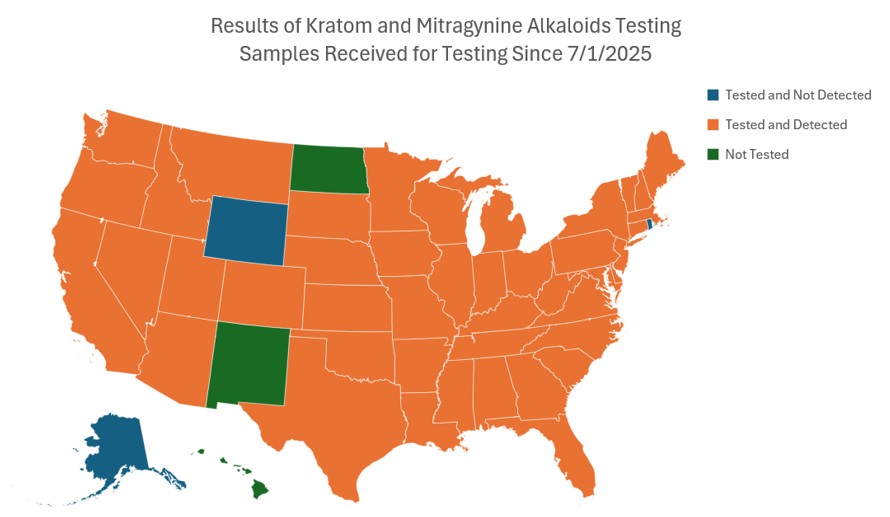
What We Are Seeing In Our Results:
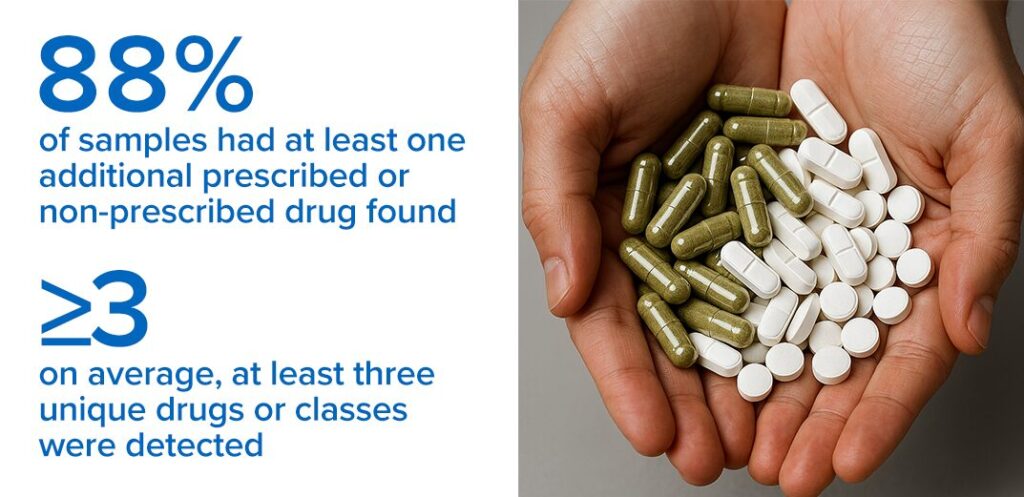
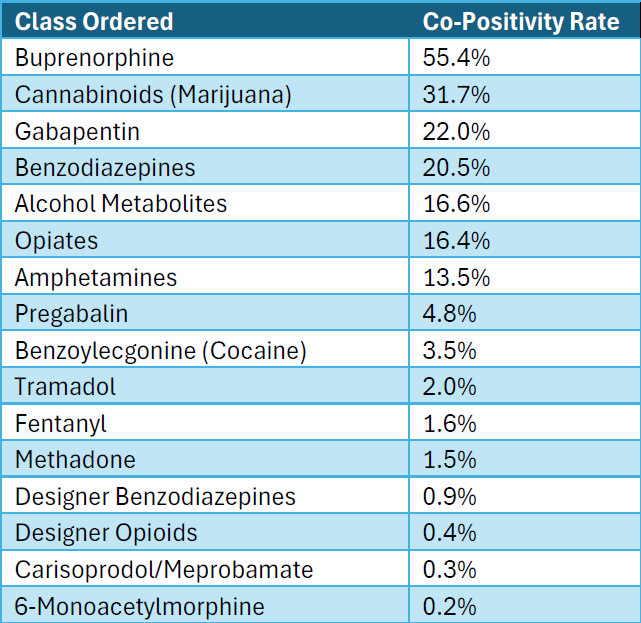
Aegis analyzed substances detected in samples that were positive for mitragynine alkaloids (mitragynine, 7-hydroxymitragynine, or mitragynine pseudoindoxyl) received for testing between 3/1/26-3/31/26 (Total Samples: 1,360). We focused on 16 unique classes of drugs that were ordered in >70% of samples tested.
The table below demonstrates classes of prescription and non-prescription substances that were co-detected with mitragynine alkaloids in specimens tested in our laboratory. This data highlights the prevalence of polydrug use in individuals exposed to mitragynine alkaloids, and expands upon current information available regarding the frequency at which mitragynine alkaloids use occurs within a high-risk drug combination.
Co-Positivity Rate in Samples Found Positive for Mitragynine Alkaloids at Aegis
Why It Matters
Kratom is associated with respiratory depression, dependency, and overdose, especially if combined with opioids or sedatives.
Polysubstance use is a common and clinically important feature of kratom exposure, with many adverse outcomes occurring when it is taken alongside other substances. Evidence shows that serious toxicity and deaths linked to kratom often involve combinations with opioids, benzodiazepines, and other central nervous system depressants, highlighting the additive or synergistic effects of these drugs. Observational data also indicate that kratom users frequently use other substances such as cannabis, alcohol, stimulants, opioids, and sedatives, making polysubstance use a consistent pattern across populations. In some cases, individuals intentionally combine kratom with other drugs to enhance euphoria or manage withdrawal symptoms, further integrating kratom into broader substance use behaviors.3,4
What are Kratom, 7-hydroxymitragynine, and Mitragynine Pseudoindoxyl?1,2
Kratom is a psychoactive botanical from Mitragyna speciosa containing the primary alkaloid mitragynine, whose use in the U.S. has increased due to euphoric and mood-altering effects.
Its metabolites, including 7-hydroxymitragynine (7-OH) and mitragynine pseudoindoxyl, are detectable in urine and exhibit significantly greater opioid receptor potency than the parent compound. These unregulated substances are increasingly isolated, synthesized, and sold over the counter.

