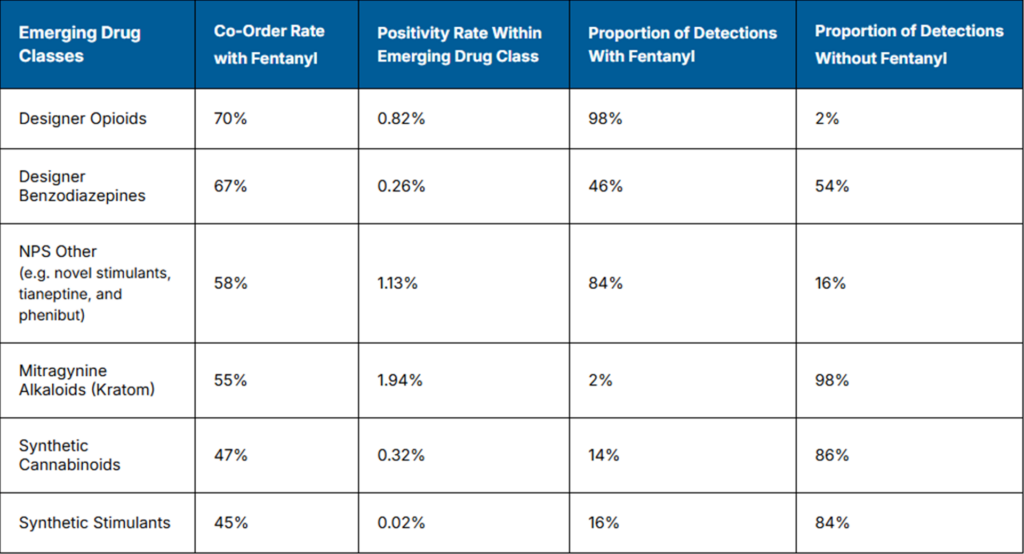
New findings reveal that many high-risk substances are more commonly detected when fentanyl is not present.
New data from Aegis highlights that detection of high-risk substances does not always occur in samples with fentanyl present. While designer opioids and common illicit adulterants such as xylazine and medetomidine are most often detected alongside fentanyl, several other emerging substances—including designer benzodiazepines, synthetic cannabinoids, synthetic stimulants, and mitragynine alkaloids (kratom)—are more frequently identified in specimens where fentanyl is not detected.
These findings suggest that relying solely on fentanyl-focused screening strategies may miss individuals using other potentially dangerous novel psychoactive substances. For providers, comprehensive definitive toxicology testing remains an important tool for identifying emerging drug threats, supporting accurate risk assessment, and informing appropriate clinical decision-making.
About the High-Risk Substances
- Exposure to novel psychoactive substances (NPS) is often characterized as occurring most frequently in individuals using illicitly-manufactured fentanyl.
- While this may be true in certain geographies, or more likely in individuals that are purchasing illicit opioids, it may not necessarily be true for individuals exposed to other types of novel drugs.
- The data presented reviews positivity rates and frequency of detection by class within and without fentanyl.
- While designer opioids and illicit adulterants (e.g., xylazine, medetomidine) are most frequently found in specimens containing fentanyl, designer benzodiazepines, synthetic cannabinoids, synthetic stimulants, and mitragynine alkaloids (Kratom) are more frequently found in specimens in the absence of fentanyl.
- Leveraging an orthogonal testing approach for risk stratification (e.g., presumptive testing for fentanyl to initially evaluate high-risk substance use) may prove beneficial in identifying individuals that are also exposed to designer opioids and/or novel stimulants, but it may result in under-identification of those using other high-risk drugs, especially mitragynine alkaloids (Kratom).
- When necessary, definitive testing is key to identifying high-risk substance to allow for more sound clinical decision-making.