Natural, Semi-Synthetic, and Synthetic: What You Need to Know
The Cannabis industry has become increasingly diverse and includes a variety of options for cannabinoid use. Due to the potential for psychoactive and other adverse effects, as well as combined effects with some prescription medications, clinicians may benefit from utilizing definitive testing for multiple types of cannabinoids in clinical practice. Testing for cannabinoids at Aegis is divided into two categories to allow clinicians the flexibility to choose what is medically necessary to test for each individual patient.
Aegis’s Testing for Cannabinoids*
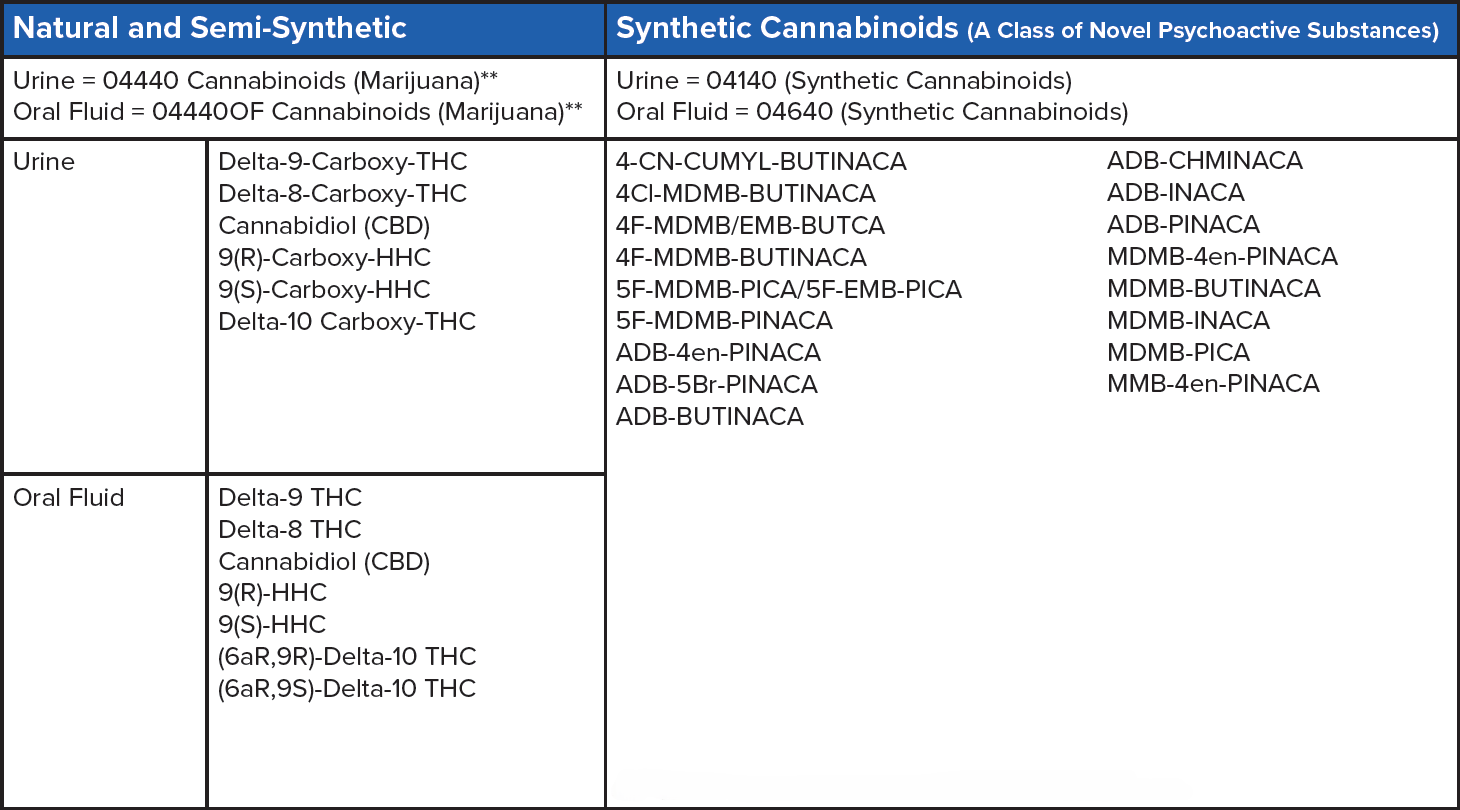
Analytes listed are current as of December 15, 2025.
*Detection of cannabinoids in this test does not allow for determination of the source of the positive findings.
**Presumptive testing with reflex to definitive testing by Mass Spectrometry.
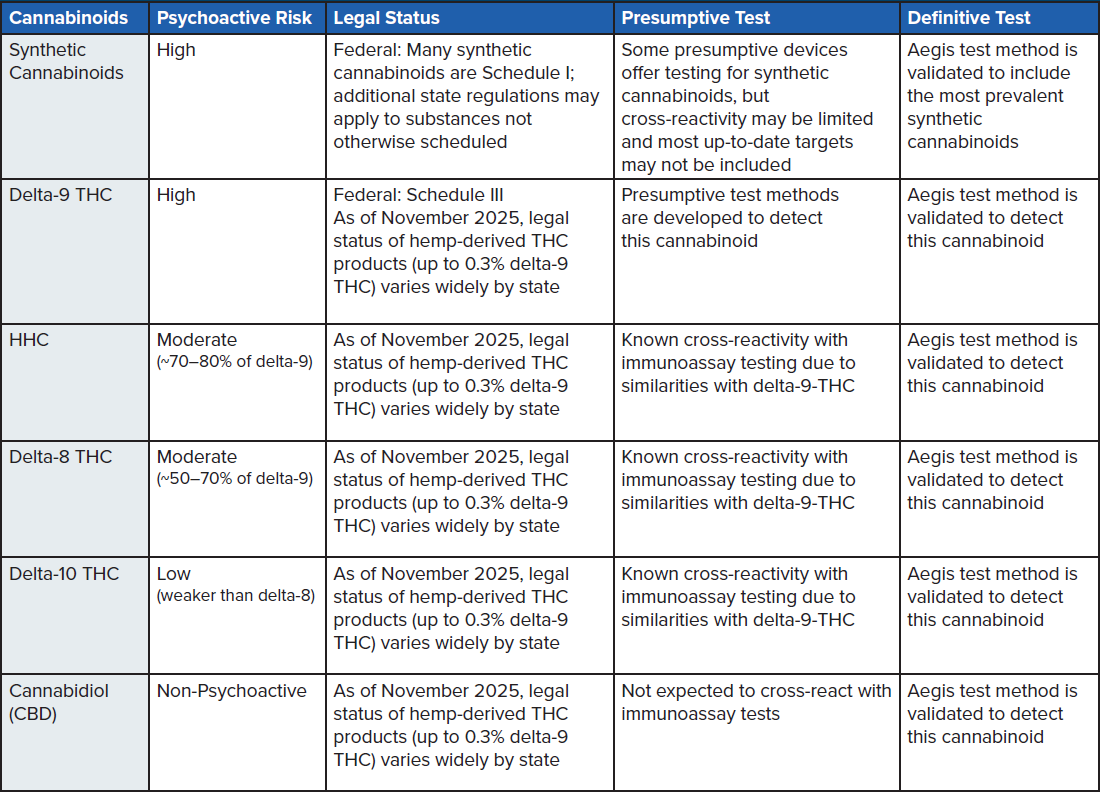
The Natural & Semi-Synthetic Cannabinoid test offerings in urine and oral fluid are testing for the same substances, however, the urine test identifies metabolites, whereas the oral fluid test primarily identifies parent substances. HHC, delta-8 THC, and delta-10 THC are psychoactive compounds known as semi-synthetic cannabinoids because, while they have the potential to be present in cannabis naturally or as degradants of other cannabinoids, commercial semi-synthetic cannabinoid products are mostly made by synthesis from hemp-derived CBD or other cannabinoid precursors, rather than from extraction directly from cannabis plants.
Synthetic Cannabinoids are designer substances created to mimic the effects of delta-9 THC, the main psychoactive cannabinoid in marijuana. Synthetic cannabinoids are abused for their psychoactive properties and are typically more potent than delta-9 THC. Individuals using these substances may develop intense symptoms of psychosis and other adverse effects such as tachycardia, elevated blood pressure, unconsciousness, tremors, and seizures. While classically referred to as “K2” or “Spice,” the specific compounds that are defined as synthetic cannabinoids change frequently. Thus, Aegis has committed to a bi-annual update to our Novel Psychoactive Substances testing (a class of which is Synthetic Cannabinoids) in alignment with scope recommendations from the Center for Forensic Science Research & Education.
List of Cannabinoids